Stratford Climate Action was formed in late 2018, to accelerate climate action at the local level. The IPCC’s report, published in October, on the difficulties and necessity of limiting global heating to 1.5 degrees, brought to a head a sense of climate anxiety that had been building through the extreme heat of the 2018 summer, from the devastating Eagle Creek wildfires in 2017. Some were new to activism, whilst others came from local branches of older campaigns, like Friends of the Earth and Transition Town.
Our initial campaign idea was to doorknock people and ask them to pledge actions from a list. This eventually became our Pledge for the Planet campaign—though it proved difficult to find enough people willing to doorknock. Our chair explains the thinking behind setting up the group in a newspaper article here.
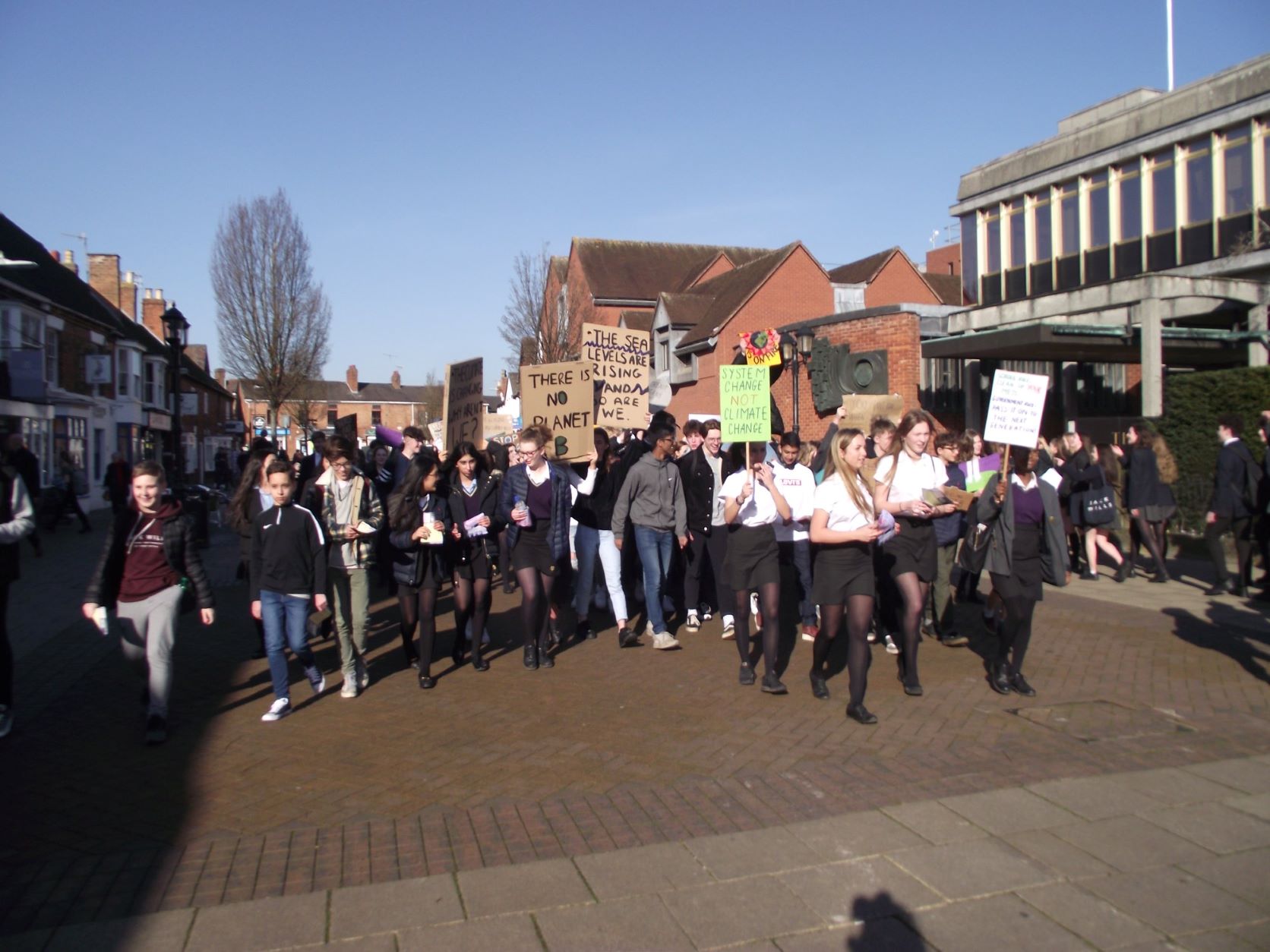
What did take off were the youth strikes for climate, inspired by Greta Thunberg, and alongside them, a campaign to get local councils to declare a climate emergency. Members with young children helped organise several youth strikes, some reaching around 300 people, and others much smaller. At the same time, we launched a petition calling on the District Council to declare a climate emergency, which garnered well over 1,000 signatures.
All three local councils ended up declaring a climate emergency. In response to our arguments, the District Council accepted an amendment to their planned motion, accepting the aim of reaching net zero by 2030 rather than 2050. Most councillors, from all parties, proved passionately in favour of taking on the challenge of planning for net zero. They had clearly been moved and impressed by the youth strikes, which they cited as a powerful influence on their decision. Young people can definitely make a difference if they organise and act together!
However, although Warwickshire County Council also declared a climate emergency, their Deputy Leader remains a climate change denier with influence on some of his colleagues (if on no-one else). The atmosphere was more tense, amid accusations of ‘virtue signalling’ and the Conservative regime rejected our arguments for a more ambitious date.
At the same time, we also worked towards a climate action day at the local Methodist Church (which has been refurbished to reduce its environmental impacts). 40 organisations put on stalls to teach local people about what they could do, from solar energy providers, to waste officers from the council, to the local vegan society. We worked hard to make the event a big success, with hundreds of people coming to look around over the course of the day, and many people signing the climate emergency petition.
Our efforts have remained split between activism, community-oriented events like eco cafes, constructive representations to local councils, and attempts – mostly forlorn – to influence our rather over-secure MP. Youth strikes continued until the pandemic, sometimes with several hundred attending, and developed into ‘global climate strikes’ for everyone, not just school students.

At a march in September 2019, we delivered a letter calling on the RSC to dump BP as sponsor. This led to the RSC agreeing to meet with the anti-fossil fuel campaigners, BP or not BP, who we had invited to the march, and some of the student activists. As a result, the RSC agreed to drop BP as a sponsor. Fossil fuel companies are not, and cannot be, part of the solution, though their staff have many skills and should be supported in finding careers in an expanded renewable industry—something most are keen to do.
We have continued to engage with the District Council, reporting to their task and finish groups and consultations, and attending meetings of their climate change panel. In 2021, we helped establish the Warwickshire Climate Alliance as an umbrella group for climate action across Warwickshire, especially as a way of lobbying the County Council.
Covid was basically a catastrophe for climate action, cutting off the climate strike movement, and making in person meetings difficult. We adapted to Zoom meetings, hosting Q&As with our MP Nadhim Zahawi that were each attended by around 40 people, and organising reading groups. We also put together an online survey designed to explore people’s experience of lockdown, and estimate emissions that could be saved by working from home.
We would like to actively contribute to developing new ideas. In this spirit, we try to engage with local councils, with the aim of helping them to develop new ideas. You can read our responses to various consultations here.
Since 2021 we have a monthly column in the local newspaper, the Herald. Articles have been written by a variety of members. You can read some of these articles here. We have also organised numerous smaller events, ourselves or in partnership with others, including stalls, reading groups, film-screenings, walks, tree-planting sessions.
We have recently set up Net Zero Stratford, a Community Interest Company dedicated to achieving a climate hub in Stratford town centre, and to putting on events in the community. We are working on a repair café, energy saving workshops, and a community kitchen to reduce food waste and combat the cost of living crisis. For the events we have held as Net Zero, visit the Net Zero website.