 Following the shattering of yet more temperature records, the second article in our “Hottest Year” series is by Ben Shread-Hewitt. Ben is a climate, energy and geopolitics researcher and co-creator of Overshoot, a top-ranked podcast documentary on the 1.5 °C target and how we navigate a future beyond it. He writes The Geopolitical Climate on Substack and has held research roles at the Strategic Climate Risks Initiative and the Climate Bonds Initiative. His work focuses on the political economy of the energy transition and the geopolitics of a changing climate.
Great Alne probably isn’t a place you think of as on the frontlines of climate change. It’s a sleepy little village just outside Alcester, and it’s where I grew up. In 2025, a couple of my old neighbours had saved up to buy solar panels — both to do their bit for the climate, and to lower their bills.
Then the hottest summer on record came. The temperature soared, and their garden turned to straw. Then the cracks started to show. The clay their house sat upon dried out and shrank, warping the foundations and cracking the walls above. The structure was not designed to handle this part of rainy old England becoming so hot and dry. It was not designed, in short, for what the UK’s new climate had become. And things are likely to get worse: according to the British Geological Survey, damage from this ‘shrink-swell’ is on the rise, with figures of 3% of property in 1990 likely to reach 10% by 2070.
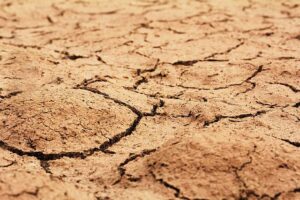 My neighbours suddenly needed to pay for expensive engineering work to fortify the foundations. And had to take this cash from their solar panel budget. This is what is called ‘derailment risk’, the consequences of climate change undermining our efforts to tackle it. My neighbours had to take money that would have helped reduce their emissions and spend it on addressing the immediate impacts of climate change.
This same dynamic is playing out across the world. Take Finland: its net-zero plans were based on the country’s vast forests absorbing enough carbon dioxide to offset its emissions. But extreme heat causes forest fires, disease, and drought, turning this massive ecosystem into a carbon source – derailing their plans to tackle climate change.
The most important question is then: what are we going to do about it? In a report I co-authored on derailment risks, we proposed five steps to tackle this challenge.
The first is situational awareness. Stratford-Upon-Avon District Council has taken the important step of aligning its carbon budgets to “limit the temperature increase to 1.5°C”. But we need to accept this alone isn’t enough, with scientists beginning to say that this target is likely already breached. This isn’t a reason to give up on decarbonisation, but it means we have to accept a new reality. Not one where the impacts of climate change can all be avoided, but where we have to weather what’s coming, whilst also preventing it from getting worse.
This leads onto the second step: resilience. Maybe this new awareness will lead the council to act decisively, building homes with extremely low carbon footprints. But will these plans be strong enough for a world of bigger floods, hotter summers, and foundations shrivelling up? Luckily, we can use win-win solutions. In the devastating 2025 LA fires, homes built to extremely energy-efficient Passivhaus standards were also those most resistant to the flames, whereas older, inefficient homes burned to the ground.
The third step is speed. Climate change is accelerating. Acting today will always be cheaper, easier, and less at risk of derailment than tomorrow.
The fourth step is to build new narratives. The old story said acting on climate change meant avoiding it. That’s no longer true. Now action is a part of dealing with the consequences, and it offers us the best chance for a safer and more prosperous future in an increasingly unpredictable world.
The final step is changing how we find solutions. Last year, I ran a workshop with Stratford Climate Action on how to adapt to extreme climate change, in which local groups gave me insightful, locally relevant, and transformative actions.
The climate has already changed. Securing our future means facing up to that new reality and acting now — before the inevitable impacts derail our ability to do so.
Originally published in the Stratford Herald.