 By Aidan Gill
The baking summer we’ve been experiencing has put huge pressure on local farmers, which makes the third article in our ‘Hottest Year’ series particularly relevant. Aidan has spent most of his career working in agriculture, more recently focusing on the agri-environment and environmental policy. He has worked in the UK, New Zealand, and Sweden, with a particular interest in Sustainable Food Systems.
As combines return to the fields across Warwickshire, harvest once again reminds us how closely connected we remain to the land around us. The changing colours of the countryside, tractors working late into the evening and grain trailers rumbling through villages are all familiar signs of the season. From cereal crops stretching across the county’s rolling hills, to dairy farms supplying fresh milk every day, this is one of the busiest periods of the farming calendar. It is also when months of hard work, and months of unreliable weather, are finally put to the test.
 This year that weather is once again in sharp focus. Following the hottest year on record in the UK, this summer is shaping up to be similarly warm and dry. While many of us enjoy blue skies, warm evenings and time spent outdoors, prolonged dry conditions can create real challenges for agriculture. Crops rely on sufficient moisture at key stages of growth, grass growth slows for livestock farmers, and pressure on water resources increases. The weather that many of us welcome can quickly become a concern for those producing our food.
One of the immediate priorities must therefore be building a more resilient food system.
Food security is often discussed as though it simply means producing as much food as possible within our own borders. Domestic production absolutely matters, but resilience is broader than that. The UK currently produces around 65% of the food we consume overall, and around three-quarters of the food that can realistically be grown in our climate. Those figures have fluctuated considerably over time, from around 30% before the Second World War to around 80% during the 1980s.
Complete self-sufficiency, however, would not necessarily make us safer. Last year’s incredibly dry summer and wet winter demonstrated how vulnerable our own harvests can be to climate extremes. A resilient food system depends on productive British farming, alongside diverse international supply chains and reliable trading relationships. Diversity of supply creates resilience.
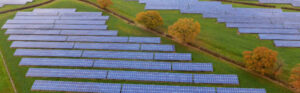
Building resilience also means securing our energy system. Public debate often presents solar farms as though they are replacing British farming wholesale, but the reality is far more balanced. Solar energy reduces reliance on imported fossil fuels, supports decarbonisation and provides many farmers with a valuable additional income stream at a time when agricultural margins remain tight. It might surprise some to learn that there is currently more land occupied by golf courses than by solar farms.
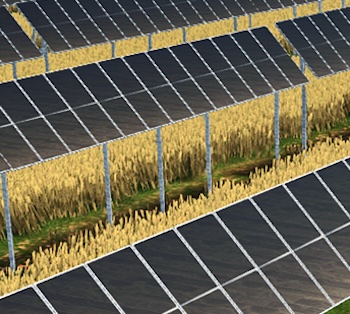
Nor does solar necessarily mean agricultural production stops. Many solar farms are havens for biodiversity, while sheep commonly graze beneath panels to keep the land productive. Elsewhere in Europe, farmers are successfully combining solar generation with crop production. In parts of France, vineyards grown beneath solar arrays have even reduced water demand by providing shade during periods of extreme heat.
Climate resilience also means restoring the natural systems agriculture depends upon. Healthy soils, pollinators, clean rivers and thriving biodiversity are not environmental luxuries, they are essential infrastructure for food production. Earlier this year, the Government’s Nature Security Assessment recognised biodiversity loss and ecosystem decline as genuine national security risks.
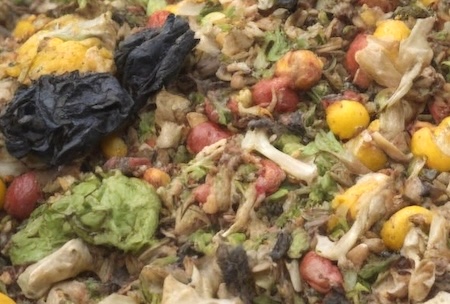
Finally, we must tackle food waste. Every tonne of food lost on farms, in factories, supermarkets, or our own kitchens represents wasted land, water, energy, and labour. Reducing food waste is one of the quickest and most cost-effective ways of strengthening food security while reducing environmental impacts.
If the hottest year on record has taught us anything, it is that resilience can no longer be an afterthought. The immediate priorities are clear: support productive British farming while maintaining diverse supply chains, embrace clean energy solutions that work alongside agriculture, restore the natural systems that farming depends upon, and ensure we don’t waste the food we already produce. We cannot prevent every hot summer, but we can build a resilient food system that is far better prepared for them.
Originally published in the Stratford Herald