 By Steve Currie, Stratford Climate Action.
The Stratford area Safe Avon Citizen Science project started two years ago in the summer of 2023, and was founded by Dr. Geoff Sallis. Geoff wanted to establish pollution levels along the Avon and tributaries. Our Stratford area group has around 40 Citizen Scientists, testing regularly at 25 different locations around the district. Reference the map below.
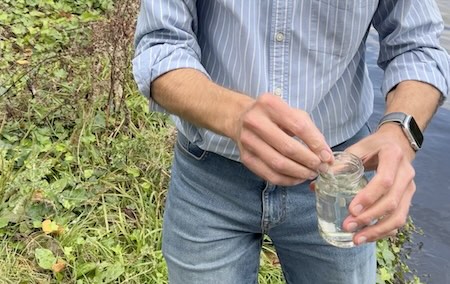
Tests include river temperature, Electrical Conductivity, Nitrates, Nitrites, and Phosphates. Tests are conducted using the equipment and methodology developed by Cardiff University and the results are collated on to a Safe Avon database.
Analysis of the Stratford Safe Avon results has shown that pollution is consistently high to very high when judged against thresholds established by the Fresh Water Habitats Trust. Pollution in the river is due to many sources including urban, industry, agriculture, and sewage.
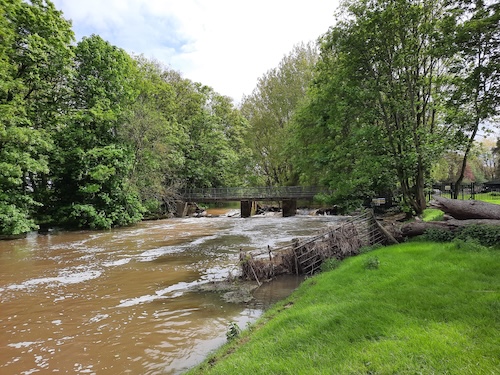
 Since embarking on the testing we have concentrated on sewage pollution and have observed regular untreated sewage treatment plants ‘spills’, especially after heavy or prolonged rainfall. Spill events occur when treatment plants have insufficient capacity to cope with the increased surface water from sewers and drains.
Spills are tracked by the Environment Agency and published annually in March. Amazingly, Severn Trent treatment plants at Frankton and Wellesbourne, have had equivalent spills durations of 6.1 and 5.5 months last year. Please note that the spills only represent duration and not volume.
These spills are of the utmost concern for river wildlife and public health, especially when coupled with the E.coli test samples collected by Chris Jones at the Fisherman’s Car Park as described in our Stratford Herald article, March 2025.
 We asked Severn Trent to explain these high levels of sewage spills, causes, and when they would be resolved. They invited Safe Avon and interested parties to a presentation at Wellesbourne Village Hall. About 40 people attended, including volunteers from Safe Avon, Severn Rivers Trust, and interested parties from Marton and Wellesbourne villages.
The presentation was followed by a ‘Q&A’ session with a wide range of questions from the audience, who included Stratford MP; Manuela Perteghalla, Councillors; Nigel Rock and Natalie Gist from Bishops Itchington, Fenny Compton and Napton. We were very glad to have their backing and support for the meeting and our Citizen Science project.
 Severn Trent described their next 5 year, £21 billion investment plan. An eye-watering cost for a huge area from stretching from Sheffield to Bristol, Leicestershire to Hafren (Wales). We wonder if that level of investment be sufficient to cope with population increase, new housing plans and Climate Change, who knows? Current predictions suggest an increase of 50% in winter flooding and a 37% increase in summer drought by 2050.
Treatment plant spills often occur due to foreign matter, debris, fat bergs and wet wipes blocking the system especially in high rainfall. The U.K. sewage industry claims it removes 2,5 million wet wipes that contribute to 300,000 blockages annually.
To reduce the risk of blockages it is recommended that we should only flush the 3 Ps: paper, pee, poo. Look out for the safe to flush labels. We should also avoid putting fats, oil, grease and food leftovers down the sink.
In addition, we could harvest rainwater in leaky water butts and create soakaways in gardens and driveways to slow the rain water flow to treatment plants.
We will continue to monitor pollution and sewage spills, and maybe we need a campaign to raise public awareness?
Originally published in the Stratford Herald.


