
 What do you know about the weather?
It’s flaming June and thoughts turn to sunshine and shade. But how much do you know about the weather? Test yourself by trying the following questions:
- A scientific paper published in 1897 demonstrated a relationship between air temperature and
(a) the pitch of a skylark’s song. (b) the rate at which crickets chirp. (c) the speed at which harvester ants move. (d) the rate of growth of termite mounds.
- In order to reach the 20 warmest years on record, you have to go back from this year by
(a) 22 years. (b) 32 years. (c) 42 years. (d) 52 years.
- In terms of percentage, meeting the government’s net zero targets would require solar farms to occupy
(a) 0.4% of the UK’s land. (b) 0.6% of the UK’s land. (c) 0.8% of the UK’s land. (d) 10% of the UK’s land.
- A cumulonimbus thunderstorm cloud can weigh as much as
(a) A typical 4×4 car. (b) a combine harvester. (c) a fully loaded Boeing 747. (d) the Royal Shakespeare theatre including a sell-out audience.
- Raindrops can fall at a speed approaching
(a) 23 mph. (b) 33 mph. (c) 43 mph. (d) 53 mph.
- The temperature of a tornado can reach over
(a) 10oC. (b) 100oC. (c) 500oC. (d) 1,000oC.
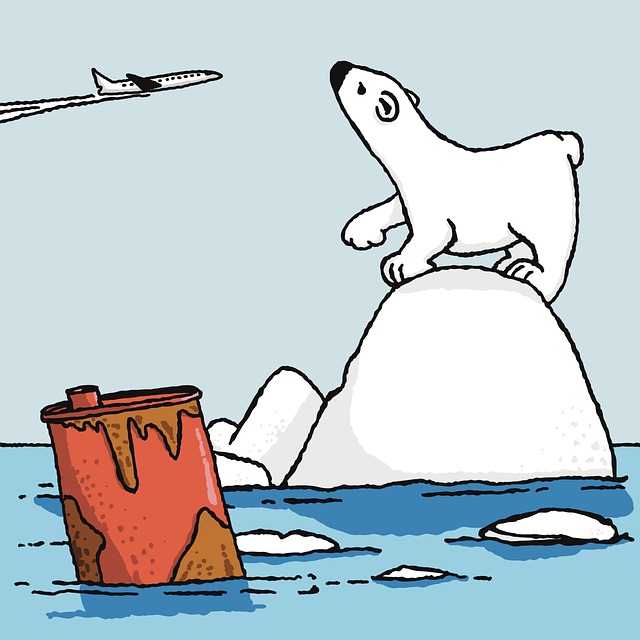 Steve Currie’s Climate Quiz
Questions
- Which British parliamentarian was renowned for helping to secure the 1997 international Kyoto Protocol on climate change?
- By volume, what percentage of the earth’s atmosphere is carbon dioxide?
A: 4% B: 0.4% C: 0.04%.
- How much has the earth’s atmospheric CO2 ppm (carbon dioxide parts per million) increased by in the last 65 years?
A: 31.3%; B: 16.1%; C: 0 %.
- Volcanoes emit more CO2 than human activities.
True or false?
- A diesel car emits more carbon dioxide per kilometre than a long haul jet.
True or false?
- Home delivery shopping has a lower carbon footprint than driving to the shops.
True or False?
- How many kilograms of CO2, did we save by repairing our old tumble drier instead of buying a new one?
A: 542 kg; B: 271 kg; C: 85.5 kg.
- How many miles do you have to drive a BEV (Battery Electric Vehicle) before it has a lower carbon footprint than an internal combustion engine?
A: 110,000; B: 55,000; C: 11,000.
- How many trees would be needed to offset the lifetime carbon footprint of an average Brit?
A: 810; B: 81; C: 8.1.
- How polluted is the Stratford section of the River Avon? Is it rated as having None, Some, High or Very High levels of pollution?
- If the global average air temperature increases by 2o by 2100, how many days on average might we expect to see temperatures above 25oC in Warwickshire in the summer?
A: 14 days; B: 25 days; C: 35 days.
- Which political party was responsible for introducing the Local Nature Recovery Strategy?
A: Conservative; B: Labour; C: Liberal Democrats.
 If you want to know more about the climate and how we can help in adapting to changing conditions, why not try for free Carbon Literacy certification? Training takes place over two mornings in small groups and is friendly and fun. If you’d like to find out about future meetings, you can contact Janet Palmer at janet@netzerostratford.org.uk. In the meantime, you can try your hand at Steve Currie’s Climate Quiz, which appears as part of this article on the Stratford Climate Action website at https://www.stratfordclimate.org/
Answers to ‘What do you know about the weather?’
- (b) In an article in The American Naturalist with the title ‘The cricket as thermometer’, Amos Dolbear produced a formula expressing the relationship between the chirp rate of a cricket species and air temperature. Unfortunately, crickets, like other insects, are under threat. A 2023 a European study spanning 34 years of data found that 60% of insects are already struggling because of climate change.
- (a) The World Meteorological Organization reports that the last 22 years have seen 20 of the warmest years on record. In this period, 2016 and 2020 tied as he hottest years, based on the earth’s average surface temperature.
- (b) According to an analysis by Solar Energy UK, Currently, solar farms currently cover less than 0.1% of the total land area and would require only 0.6% of UK land by 2050, which comes to less than the land currently used for golf courses. Reassuringly, the UK Government Food Security Report does not identify solar farms as a risk to the UK’s food security.
- (c) A cumulonimbus thunderstorm cloud can weigh as much as 500,000 kilograms, which is actually a couple of thousand more than a fully loaded 747-400. These clouds can also generate as much energy as ten of the atomic bombs exploded over Hiroshima and can produce hailstones the size of tennis balls. Expect more of them as the climate changes.
- (a) A number of factors affect the speed at which raindrops fall, but according to NASA’s Global Precipitation Measurement the largest can reach a maximum speed of 10 metres per second, which equates to 22.37mph. Every raindrop that falls to the ground contributes to the one billion tons of water that fall on earth every minute. According to the Met Office climate change is making heavy storm downpours and total rainfall more frequent and intense in the UK.
- (d) Fire tornados, also known as fire whirls or fire devils, are formed from a combination of intense heat and turbulent wind conditions and can reach temperatures of over 1,000oC. They’re classified as tornados rather than whirls only if the vortex extends from the surface to a cloud base. Tornados have travelled as far as 219 miles and the biggest was 2.6 miles wide.
Answers to ‘Steve Currie’s Climate Quiz’
- John Prescott, a.k.a. two Jags Johnny, former Deputy Labour Prime Minister & Right Honorable Member of Parliament for Kingston upon Hull East is acknowledged for his colossal achievement in securing the Kyoto Treaty, as portrayed in the Royal Shakespeare Company theatre production of ‘Kyoto’ in 2024. John Prescott passed away at the age of 86 on the 20/11/2024. RIP John.
- C: 0.04%. This is an incredibly small amount of gas that is responsible for keeping our climate at the right temperature, and just like the amount of salt on food, it doesn’t take much to become unbearable.
- A: 31.3%. 65 years ago our atmospheric CO2 concentration was 320 ppm. It has now exceeded 420 ppm and is growing exponentially.
- False. Human CO2 emissions are at least 100 times greater than volcanic CO2 emissions.
- True. According to many sources, a diesel car emits about 170 grammes of CO2 per kilometre for one occupant, compared with a Boeing 747-400 long haul jet at 101g/km (based upon 80% occupancy). However, high altitude emissions have twice the greenhouse gas potency, which equates to 202g/km. That value does not include all of the service support for aircraft, passengers or in-flight fuel dumping to achieve optimum landing weight. (Source: carbonindependent.org)
- True. According to Green Logistics, the average car shopping trip is 12.8 miles, which equates to 4.4kg of CO2, compared with an average home delivery of just 0.18kg. Collection from a pick-up point whilst on a shopping trip would make a complete saving.
- B: 271 kg. According to the International Repair Café, an electrical appliance weighing 31 kg will yield a net CO2saving of 272 kg. The replacement door latch and rotor bearing, including postage and repair instruction video, costs £32. That is the equivalent of 170 showers.
- C: 11,000. According to the International Council on Clean Transport, a BEV vehicle would take 11,000 miles before it hit the CO2, break-even point. This mileage is entirely independent of many factors but is an interesting myth slayer.
- A: 810. The lifetime carbon sequestration for a single tree is nominally 1 tonne of CO2. The average lifespan of a UK resident is 81 years and the annual UK resident emits 10 tonnes of carbon per person, resulting in a lifetime requirement of 810 trees per person. The population of Britain is 68 million which requires 55 trillion trees and an area of approximately 22.3 million acres, a third of Britain.
- High or Very High levels of pollution. Stratford Citizen Scientists have conducted weekly tests for more than 12 months at 15 different sites. The tests were carried out using the equipment and processes defined by Cardiff University and during this period it was found that phosphate and nitrate levels ranged from High to Very High.
- C: 35 days. The average number of days exceeding 25oC in Warwickshire was 14 days from 1981 to 2000 and 25 days from 2001 to 2020. By 2100 it is estimated that there will be 35 with temperatures greater than 25oC.
- A: Conservative. The Sunak government introduced a legally binding Local Nature Recovery Strategy as England was widely considered to be one of the most nature-depleted countries in the world!