
Do you own a patch of mown lawn or see one in your daily life? If so, please consider encouraging those responsible for cutting it to let it grow longer – even just in part. Biodiversity is at the heart of a resilient landscape; one which can help reverse climate change. Intensive farming and land taken for development has catastrophically reduced biodiversity. In November, Britain will host the annual UN Conference on climate change (COP26). Allowing grass to grow long, turning it into a small but significant wildlife haven is one way we can do our bit as individuals, in the run up to this important event.
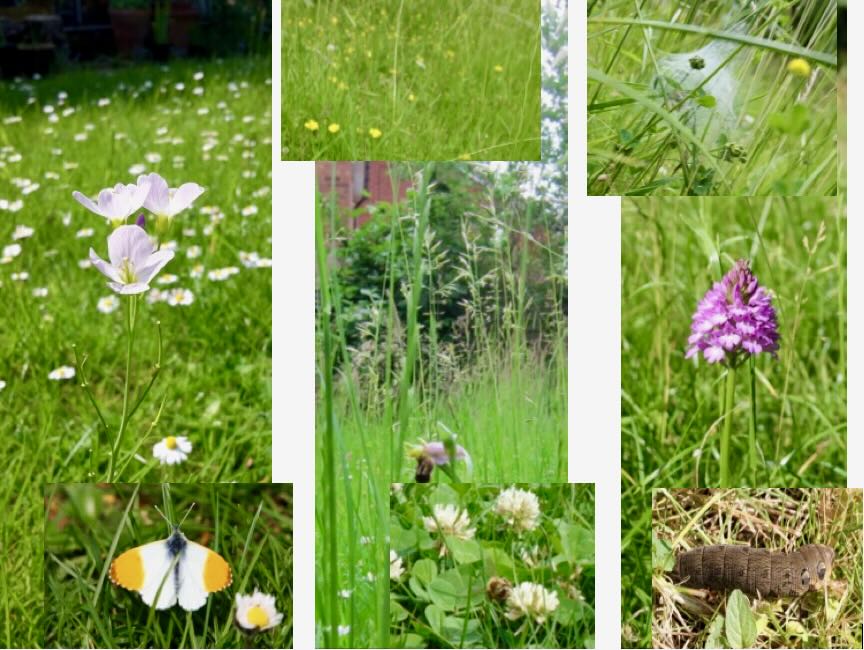
These pictures show some of the plants and creatures which have arrived in our garden since we allowed part of our lawn to grow. We now spend more time looking into the long grass than at the flowers in our borders. It’s a buzz of activity from early Spring until the end of Summer!
We started with a square metre. I had heard that it was possible to grow a mini-meadow in your garden so decided to give it a go. We just mowed around it, leaving it to grow naturally until August. In its second year a bee orchid appeared! Apparently orchids have fine seeds which travel well, and establish quickly if there are favourable fungi in the soil. This was very exciting!
Later we let a small strip grow long too. One sunny day, we saw a huge caterpillar making its way out of the long grass. Checking the books, it turned out to be the larva of an Elephant Hawk-moth – a fabulous pink and brown, furry moth with a wing span around 5cm! Long grasses are food for many moths and butterflies, and attract them to lay their eggs. We were hooked.
We now leave around half our lawn to grow until the end of summer. The grasses get long enough to ‘flower’ at about knee high. Last year there were four pyramid orchids and over 40 bee orchids; we have cuckooflower, crickets and a host of new moths! Our garden is about average for Wellesbourne. Just leaving grass until the end of June allows the daisies to flower. They prefer grass 3-4cm long, as do white clover and self-heal (a cute little purple flower); all good pollinator plants.
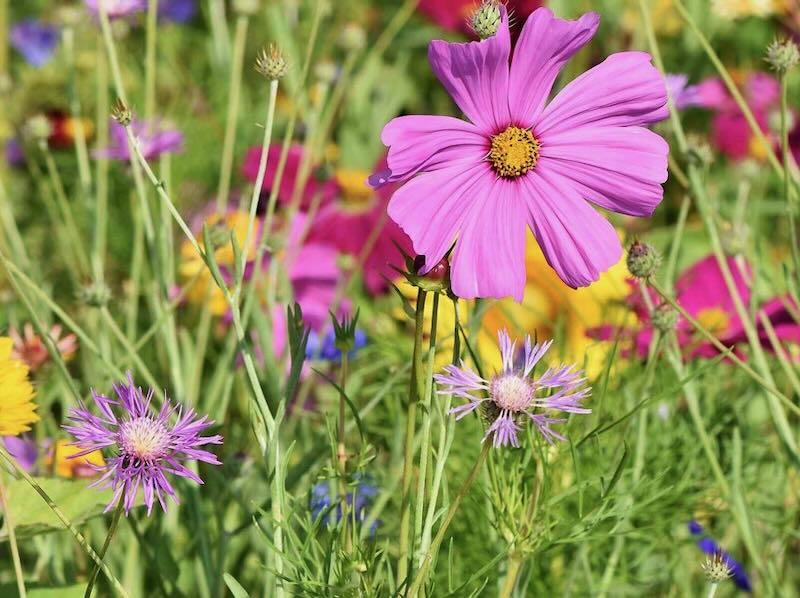
Our gardens protect about half a million hectares of land in England and adopting ‘no mow’ until June or August is one of the most rewarding and easy ways we can help to support local wildlife and increase carbon uptake by the land. Much more can be protected if we urge other places where there is mown lawn to do the same. Note that if the lawn has been fed and herbicides used in the past, there will be a wait and you may have to take some action to allow a more natural state to return. However, there is plenty of advice out there and you do NOT need to strip the top turf and start all over again…. Just be patient.
For more information, visit www.rhs.org.uk/get-involved/wild-about-gardens or read David Goulson’s book ‘The Garden Jungle’. To join Stratford Town Council’s ‘Stratford Goes Wild’ WhatsApp group, contact Cohl.Warren-Howles@stratford-tc.gov.uk