
 Rishi Sunak’s recent u-turns take us further away from meeting our legally binding commitments under the Paris Agreement. Before his speech, the Committee on Climate Change already considered that there were only credible policies in place to meet 1/5th of the emissions cuts needed over the next decade. Preliminary analysis by Carbon Brief suggests we are now off-track to meet our 6th carbon budget and our Paris commitments.
The government has been ostentatiously failing for a while now. In September they held an auction to award contracts for renewable projects, which failed to award any contracts for offshore wind: something widely blamed on the government offering a starting price so low that no companies were willing to bid. Targets for offshore wind – historically a UK strength – are now at risk.
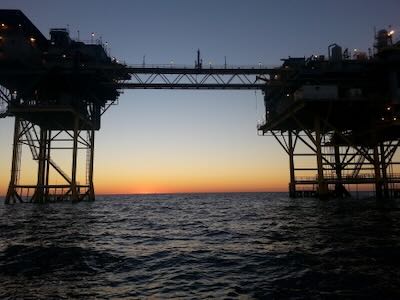
The government is also stridently embracing fossil fuel extraction in the North Sea. It does not appear to matter how often the arguments for doing so are debunked. The International Energy Agency’s view is that existing oil and gas infrastructure is sufficient to cover the transition period. The government does not argue against this, but insists that producing ‘local’ fossil fuels will create a special Putin-busting, price-reducing supply direct to the domestic market. Yet they have been told, over and over, that new North Sea oil and gas will be sold on international markets, where prices are controlled by the production decisions of the big producers (e.g. OPEC), thus doing nothing to reduce our vulnerability to disturbances in international energy markets.
The government are not only wrong, they are obviously wrong, and know they are wrong. Sunak’s speech was full of phantasmal threats, chosen for their capacity to set teeth gnashing. ‘Proposals’ from the margins of political discussion, or in some cases never even dreamt of (such as the proposal for seven household bins), were dramatically ‘scrapped’, as if they were approved policies. We were told his government would never force people to ‘rip out’ functioning boilers, when what was being discussed was a policy to ban sale of new oil boilers.
We also see this in arguments around the decision to delay the ban on the sale of internal combustion engine (ICE) cars from 2030 to 2035. Sunak’s first argument for doing this was that it still costs more up front to buy an electric vehicle (EV) (though the EV will save you money over its lifetime due to cheaper running costs). But Sunak also said that he still expected most new cars to be EVs in 2030, due to falling prices making them the cheaper option. So he knows the reason for deferring the ban won’t apply in 2030. In fact, Climate Change Committee analysis suggests that the delay to the ban will cost the British public £6 bn in savings.
The speech was based on the idea of a trade-off between the green transition and the finances of ‘working people’ and ‘hard-pressed British families’. But analysts have estimated that the lifting of energy efficiency requirements on landlords will cost tenants perhaps £1.75 bn in energy bills. More importantly, renewable energy, electric vehicles, batteries, and other green technology, are all currently exhibiting exponential year-on-year declines in price, and increases in deployment. Importantly, these trajectories have repeatedly been underestimated in the modelling done by both the International Energy Agency and the IPCC. Analysts who are attempting to correct for this failure believe global fossil fuel demand peaked in 2019, and will enter visible terminal decline in the latter half of this decade.
This means that it is no longer a useful question to ask which party is ‘the party of business’. We are in the throes of what Jeremy Rifkin calls the ‘third industrial revolution’, a transition between two interconnected systems of communications, power and transportation technologies. Capital is split between the opportunities provided by the new technologies, and the desperate attempt to maintain the values of outmoded fossil fuel assets. Thus, numerous companies and industry figures have openly criticised Sunak’s u-turns. The outcome is predetermined by the plunging cost curves. The only questions are how long it will take, and how chaotic it will be.
We cannot rely on green capitalism to build us a liveable planet: renewables are material intensive, and there is a great risk of toxic mining practices turning large areas of the global south into sacrifice zones. These risks need to be mitigated by technological innovation and better worker conditions in the mining industry, as well as greater energy efficiency (insulation) and reduced production (often called ‘degrowth’), none of which will be automatically induced by capitalist imperatives.
But as it is quite clear that fossil fuels are unambiguously and unavoidably rendering our planet unliveable, these are problems to be confronted, not an excuse to embrace failure. I cannot see how we can have any sensible discussion of these issues, as long as the fossil fuel lobbies have the heft to induce a British Prime Minister to dump such rubbish into the national conversation. In such circumstances, our priority should now be to do everything we can to hasten the global shift away from fossil fuels.


