
 By Paul Fairburn.
The House of Lords Environment and Climate Change Committee recently highlighted a trend: a surge in misinformation about electric vehicles (EVs). Some of these commonly held beliefs have an element of truth in them but are overblown. Let me list some, and present the facts.
EV batteries don’t last – Unlike phone batteries, EV batteries are robust. Most brands offer an 8-year/100,000-mile warranty, often better than internal combustion engine (ICE) warranties.
EVs regularly catch fire – Petrol and diesel cars are 20 times more likely to catch fire than EVs, according to the Swedish Contingencies Agency. Remember the Luton airport fire? It was caused by a diesel vehicle.
EVs pollute more than ICE cars – While EV manufacturing emits more carbon, their lifetime emissions are significantly lower than ICEs, even in countries with dirty grids. An EV pays off its “carbon debt” between 11,000 and 16,000 miles.
EV maintenance costs are high – EVs have fewer components prone to failure. Leasing company Tusker Direct estimates that EV maintenance costs are 30% lower than ICEs.
There’s not enough Lithium – The world has ample lithium for EV batteries, and EV batteries can be recycled, reducing Lithium demand in future.
EV manufacturing requires child labour – While cobalt mining has faced ethical challenges, Cobalt-free LFP batteries now power 40% of EVs. Manufacturers have significantly reduced cobalt usage in the other 60%. Unfortunately, some cobalt has been produced under appalling conditions, but remember – some of that has been used in our mobile phones, and to refine petrol and diesel for the last 25 years.
EV tyres cause high levels of particulate pollution – All vehicle tyres wear down and release rubber nanoparticles. However, driving style influences tyre wear more than weight, according to an RAC study.
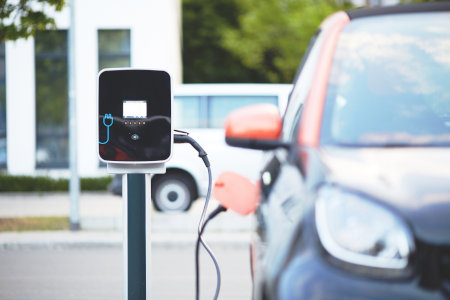 The grid can’t cope – National Grid ESO says the UK’s electricity grid could comfortably handle an overnight switch to EVs. A 16% decline in electricity demand over the past 20 years is the main reason.
Heavy EVs will break car parks and bridges – EVs are heavier than ICE cars, but multi-storey car parks are designed for 2.5-tonne vehicles per space. Large SUVs weighing over 2 tonnes have used these, and bridges, without incident.
Old EV batteries will be an environmental hazard – Old EV batteries are valuable (£3,000-10,000 each) and can be reused for static power storage. After that they can be recycled into new batteries.
Synthetic fuels are the future – The IPCC notes that synthetic fuels are up to three times more expensive than conventional fossil fuels, and moving cars using electricity is more efficient.
EV sales have slumped – No, EV sales continue to grow, just at a slightly slower pace.
EVs are more expensive – This is true for new cars but the gap is narrowing. Experts now expect EV and ICE prices for comparable cars to be similar by 2027. Second-hand EV prices are very attractive. You should also check the insurance costs of the models you like, as EV insurance can be 10-20% higher, with Teslas even higher. But EVs charged at home, at night, cost 2-3p per mile in fuel. Much less than an ICE car.
EVs lose range in winter – EVs do lose range in winter, like ICE cars. The Norwegian AA found that EVs experience a 16-20% range reduction in cold conditions. Petrol cars also suffer a 15% fuel efficiency drop in low temperatures, more when the engine is cold.
For more, see ‘The Little Book of EV Myths’
This article was originally published in the Stratford Herald.

