Last year the temperature in the UK set a new record and we have just seen the hottest May temperature ever, hitting 35oC. Then, less than a week later, the United Nations voted by 141-8 to make taking action to curb greenhouse gas emissions a legal obligation.
Naturally, the vote came as good news to us at Stratford Climate Action, but we recognise that not everyone shares our views and that it’s important to consider different perspectives on the challenges we face. For that reason, we’ve invited experts from six different fields to respond to the following question: “2025 was the hottest year on record, so from your perspective what are the immediate priorities in terms of actions to be taken?” The perspectives covered are climate activism, research, agriculture, politics, finance and education.
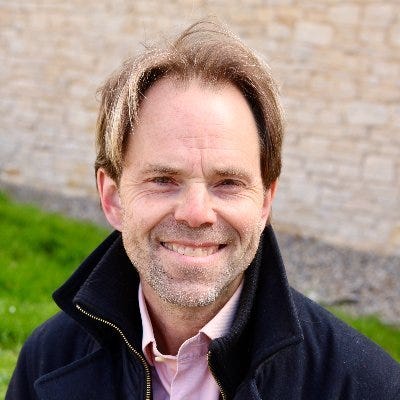
We begin with climate activism and an article by Rupert Read, co-director of the Climate Majority Project and Emeritus Professor at the University of East Anglia, who will be giving the keynote on the final day of Great Big Green Week on June 14th.
 You are not alone — that is the first thing to say.
The worry about how you are going to find that extra £200 to pay your electric bill, as your roof leaks energy and heats the sky. Or how you will meet the rising cost of food and petrol, with the straits of Hormuz still blocked and chaos resulting. Perhaps even how to keep your child or grandchild cool during another record-breaking summer. All those fears make you part of a growing majority. A climate majority.
Last year went down in the history books as the warmest year in the UK since records began, setting multiple alarming climate milestones.
We have gone too far down the wrong road to stop it stone dead — and this is just the beginning. It’s not only going to get worse, at the moment it’s accelerating — with the Earth heating at the fastest rate on record.
But it’s not just heat; there’s flooding, wildfires and pollution, to name just a few, impacting our everyday lives. And lurking worries about our (lack of) food resilience.
Most people sense that we and the planet we live on are in deep trouble — and want to do something about it. However, that normally does not include handcuffing themselves to railings or blocking roads to make a point!
So do we give up? Moan on social media about the lack of leadership in various governments, which have led us to this point? Or become preppers, loading bunkers full of supplies we gatekeep for ourselves?
 As I will share in my speech on Sunday, June 14th, we at the Climate Majority Project want to help people prepare for what is coming, together. At the moment, there is no national plan for how we are going to live in this changed and changing world.
What we do is activate silent majorities for change. That means researching and then connecting groups and organisations on the ground in communities like yours. We give you back the power, not to tackle global climate breakdown, but to become resilient to what is already here and the worse to come where you live and work.
One of our key priorities is ‘SAFER’, which stands for Strategic Adaptation For Emergency Resilience. It is a campaign for locally-led adaptation: the work of looking ahead, getting ready and taking care of each other.
Adaptation is currently the Cinderella of climate change and some even feel it is a distraction to urgent decarbonisation efforts.
We believe, when it’s done right, adaptation is absolutely not about giving up on curbing emissions, a goal which is, of course, essential. In fact, the instinct to protect our communities from climate risk — while grounded in local self-interest — can become a powerful driver of emissions reduction.
 Examples include retrofitting buildings to keep you warm in the winter and cool in the summer (plus save money on bills!), rewilding areas to adapt to extreme weather such as flooding (so, for example, rewiggling rivers and restoring wetlands), or setting up community food networks.
In this area, you are ideally placed to get involved: with strong communities, climate organisations already up and running and an engaged district council.
If you want to protect yourself, your family and your neighbours better, then why not start a conversation today and see where that takes you?
Rupert’s talk will take place in the Seymour Room of the Crowne Plaza Hotel on June 14th
More details here.


