By Julia Zampronio Gurden.
 It would be fair to say that the world has grown more unsettled than we imagined a few years ago, with the words: ‘world crisis’ holding a lot more weight and realism. That’s why I tread carefully in conversation when bringing up the climate crisis, as I realise it can be difficult to consider a crisis that still seems to lie in the ‘future’, when so many other immediate crises are happening right now. To those willing to hear them, however – here are two important ideas that I would like to break down. Firstly: the notion that while climate change as the ‘end of the world’ is a likely possibility, it is still only a distant one, and there is still time to prevent it.
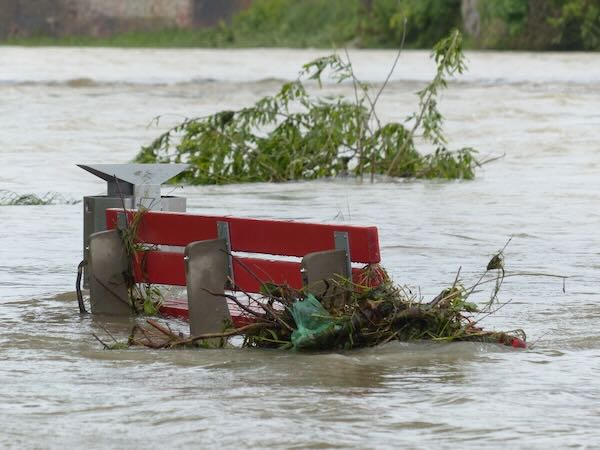
Unfortunately this is a false premise, because for many, climate change is a current, concrete reality. Those who have done the least to cause the destruction we are seeing, are undeniably the ones facing its full force. As the IPCC (intergovernmental panel on climate change) report outlines – the vast majority of deaths from climate change occur in the Global South, where the impacts of heating are 15 times higher than in regions like Europe. Also in these countries exist the “historical and ongoing patterns of inequity, such as colonialism and governance”, meaning it is countries who have historically benefitted from e.g. colonialism (including the UK) who should shoulder the costs of transition. Similarly, from Oxfam’s ‘fight against climate change’, statistics show that the richest 10% of the world are responsible for 50% of emissions, while the poorest 50% are responsible for only 10%. I use this to highlight how the impacts of climate change, much like with Covid, do not affect everyone in the same way, and the UK is among those most responsible.
While these facts are heavy, and seem to become increasingly dreadful the more you read, I would like to explore a further idea: and that is the one of ‘hope’. While the number of those who deny climate change outright is falling, there has been a shift instead to arguing against the likeliness of ‘change’ happening. I often hear thinking that follows along the lines of: “time has run out”, “governments won’t change”, “people won’t change their behaviour”, “it would require too much effort”, “we have no hope.” As someone who felt like this for a long time – if there’s anything I want to address it is that this mindset is not overly helpful, both for those who feel panicked into inaction, and those who might use hopelessness as an excuse to move onto other matters. And that is because the ‘fight against climate change’ is not a black and white case of winning or losing. It is always worth acting, no matter how much ‘effort’ it might take, since every fraction of a degree translates to saving real people’s lives. I would like this to give you hope, that in the face of a horrific situation, your actions that go towards limiting your impact on the environment, raising awareness around you, and pushing for political change are always worthwhile, no matter who tells you it will have no impact.