
By Dave Passingham.
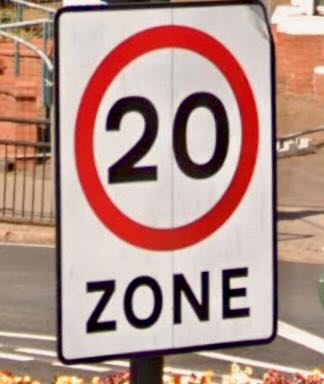 Over the last few years, we have all noticed more 20mph speed limit signs appearing around the country. The central areas of both Stratford and Alcester are now 20mph. In Oxfordshire and Birmingham, they are rolling out 20mph across their urban areas. In fact, 20mph has now been accepted as normal by local authorities where 25m people in the UK live, including the whole of Wales and (soon) Scotland. Government and other surveys consistently find 70% support in residential streets which rises after 20mph limits are introduced.
20mph helps to create places where human activity, including walking, cycling and social interaction, takes precedence over traffic. This makes for a better quality of life for everyone. It has become best practice in many countries in Europe and around the world wherever people mix with motor traffic.
One of the attractions of 20mph schemes is that they are easy to implement. There is no need for physical calming measures. Only a few signs are needed. Just one or two signs on entry and then some repeaters to remind drivers they are still in a 20mph limit. 20mph in residential areas together with a publicity campaign are cost-effective and offer seven times better value for money than heavily engineered schemes.
The Department for Transport estimates that a speed reduction of 1mph in built-up areas reduces casualties by 6%. 20mph schemes typically lead to up to 20% fewer casualties. It is by far the cheapest and easiest way to reduce accidents in urban areas. And as a bonus, noise is reduced by 50% making urban areas more pleasant places to stay and socialize.
20mph is better for the environment because it reduces damaging carbon emissions. It brings down carbon dioxide emissions by 26% and nitrous oxide by 28% compared with 30mph. These gases can also cause lung disease and early death for people who are exposed to them for long periods. There are about 40,000 deaths in Britain each year linked to air pollution, according to the Royal College of Physicians. Reducing speeds would make a contribution to reducing these deaths.
Some people have objected to 20mph on the basis that it is not enforceable. However, it is just as enforceable as any otherspeed limit if the police have the time and resources to enforce it. It has been found that speed reductions occur, even without regular police enforcement, to the benefit of all road users.
Counter-intuitively there is little impact on journey times when speed limits are reduced. This is because the ‘stop-start’ nature of traffic in built-up areas is a much more significant factor. Bus journeys and timetables times are generally unaffected.
Stratford District Council and Warwickshire County Council have both declared a climate emergency. Making the towns and villages across the County 20mph ties in closely with all the Council’s policies to address climate change, improve air quality and enable more people to walk and cycle. It is affordable and cost-effective. It would make sense to implement it here as soon as the Council can.


