 By Michael Wetherill.
We all learn about the water cycle in school. Water falls as rain from the sky, making its way into our rivers which in turn flow out to sea, where it is evaporated back into rain clouds. What we aren’t taught so much about is the water which is funnelled into reservoirs, pumped through our homes, treated at sewage works and discharged into rivers. What we especially aren’t taught is that water companies aren’t very honest about how they treat our water – and are regularly quietly discharging untreated sewage into our rivers.
This can have grave impacts on the health of our wildlife, and indeed the health of people who swim, paddleboard and row on inland water. Untreated (and even treated) sewage is packed full of phosphates, a nutrient which helps plants to grow. When phosphate levels are too high, green algae can coat the surface of the water, suffocating the fish beneath. Nitrates are another nutrient which contribute to this problem, known as eutrophication. Nitrates make their way into rivers after being sprayed excessively on crops by farmers, and combined with phosphates, can make bathing areas unsafe for public use. Raw sewage can also be instantly toxic to animals.
The Environment Agency (EA) is the river police here in England, tasked with monitoring river health and enforcing regulations. However, its budget has been slashed by government over the last 15 years, leaving it unable to undertake its duties and unwilling to prosecute offenders. Indeed, water companies now operate under a self-reporting system, where they declare untreated sewage discharge (read: dumping) events to the Environment Agency and classify their impacts. They also report the nutrient levels in the treated water they discharge.
Water companies are then periodically rated on their environmental performance, and awarded the right to raise bills if high impact dumping events are minimal. Under this system, there is a multi-million-pound financial incentive for companies to be misleading about the frequency and impact of sewage dumping. Some call this polluting for profit.
If you live in Stratford, Severn Trent is your water provider (you have no choice about that). There’s a straightforward way to see if Severn Trent is polluting for profit on the Avon – get down to the riverside and measure the water quality for yourself (in recent days, the river has been coming to you!). That’s exactly what a committed group of over 20 local volunteers have been doing since July last year, taking more than 250 samples across 24 test sites between Stratford and Tewkesbury.
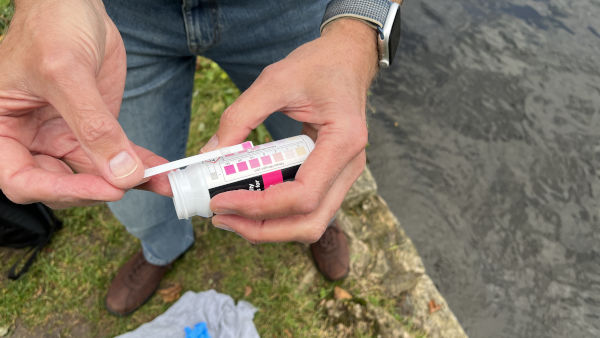 So far the data shows that 93% of nitrate readings indicate very high levels of pollution; 6% indicate high levels of pollution. 68% of phosphate readings show very high levels of pollution, with 31% showing high levels of pollution. Rivers are the lifeblood of British wildlife, providing a home not just for fish but also for the likes of otters and swans. If water companies are allowed to continue unchecked, it will not be long before this high concentration of nutrients takes its toll on our already threatened river friends.
We are using this data to drive conversations with Stratford District Council, the Environment Agency and of course Severn Trent, to get to the truth of what is happening and identify how we can work together to change things on a local and national level. Hope comes from action. If you’re interested to learn more, a recent BBC Panorama documentary called The Water Pollution Cover-Up might be a good place to start.

