
By Jo Ryder and Andy Waters of Stratford Swifts.
Their screams and breath-taking Red Arrow performances bring hope and joy to Stratford’s residents and visitors each summer.
This month sees the return of one of our most iconic migratory birds. Travelling thousands of miles, all the way from sub-Saharan Africa without landing – feeding, drinking and sleeping on the wing – the (not so) common swift reaches our shores once more.
This remarkable creature returns here every year in early May to breed and raise their young. They return to the same nesting sites – small holes/openings in the roofs of our homes and buildings – which they have used for centuries, in our towns and cities. You may not even realise they are nesting in your home, they are so incredibly ‘swift’ and adept at entering their nesting sites, and leave little evidence of their stay.
They live amongst us for three to four brief, glorious months before making the return flight to Africa. The young, fed and nurtured (& after doing wing “press-ups” to gain power) launch straight from the nest and head to Africa. They usually do not land again for up to three to four years when they too are ready to breed!
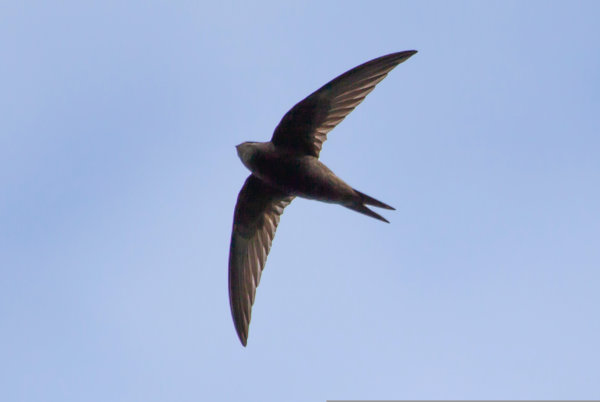 We are very lucky here in Stratford – look up to the skies throughout June and July and you will see their amazing aerial manoeuvres as they swoop and soar gathering feathers, grass and even butterflies to build their nests and insects to feed their young.
Listen and you will hear that gloriously evocative sound of summer as the ‘screeching parties’ pass by overhead – best seen around dusk, often swooping so low you can almost touch them!
But these incredible birds are in big trouble:
Between 1995 and 2020 their numbers have decreased by nearly 60% and they are now on the UK Conservation Red List.
Red is the highest conservation priority, with species on this list needing urgent action. Species such as swifts are globally threatened, with big declines in breeding populations and ranges. There are many reasons for this decline such as the loss of insects and other food sources over recent years and the destruction of important feeding sites along their migratory flyway to and from Africa. Another big contributor is thought to be the loss of nesting sites as we improve our homes and seal up our roofs allowing no space for a small swift to enter and breed.
Swifts desperately need our help if they are not to decline further.
We need to preserve as many of the existing nesting sites in our homes and buildings as possible with sensitive renovating – perhaps leaving a small opening in the eaves without compromising the roof. Where this is not possible swift bricks can often be fitted – especially in new builds – or swift nesting boxes can be installed. There are many sites offering information on how to make these quite cheaply or they can be bought from places such as swift-conservation.org, British Trust for Ornithology (BTO) and RSPB.
Position boxes as high as possible on an east or north facing wall so that the nests and fledglings do not become overheated in hot summers.
And if you want to learn more, come to an evening talk “Swifts and the Story of Life on Earth” by two eminent nature authors, Mark Cocker and Charles Foster, on Saturday 17th June at 7.30pm at King Edward VI School. (More details and ticket information).
Swifts are truly incredible creatures, so look up, marvel and enjoy them this summer!


