By Janet Palmer. Co-Ordinator, Stratford-on-Avon Friends of the Earth
In the autumn, Warwickshire County Council threw out a motion intended to strengthen the county’s Climate Action Plan. During the debate, one councillor remarked, “A motion at Warwickshire County Council cannot save the planet. Warwickshire is not the problem, it is clean and green.” But even putting aside the unsustainability of Warwickshire’s carbon emissions and air pollution, is it true that we are as powerless to “save the planet” as this councillor contends?
Warwickshire is not yet as badly affected by the climate emergency as other parts of the world. We haven’t suffered terrible wildfires like Australia. We haven’t lost our livelihoods through drought as farmers have in Somalia, nor have we experienced devastating tornadoes and storms like the United States. The islands of Tuvalu in the South Pacific are about to disappear because of rising sea levels; it’s easy for these problems to seem very far away. Yet even in Stratford, we are familiar with problems of local flooding, and most people understand that climate instability is affecting local agriculture and wildlife. The Warwickshire Wildlife Trust tells us that, to our shame, we are living in one of the most nature-depleted countries on earth. The climate and ecological emergencies are affecting humanity as a whole and it is senseless to pretend that Warwickshire is “clean and green” and somehow isolated from the rest of the world. Greenhouse gas emissions do not recognise borders.
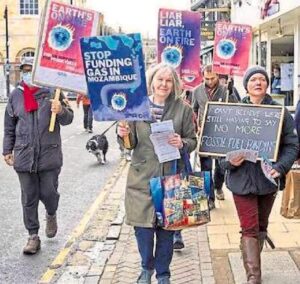
I have never visited Mozambique and until recently, I wasn’t sure that I could even find it on a map. Yet hearing that the UK government plans to invest over £750 million of taxpayers’ money in an offshore liquefied natural gas (LNG) project in Mozambique horrifies me. This project will lead to massive greenhouse gas lifecycle emissions – between 3.3 and 4.5 billion tonnes, more than the combined annual emissions of all 27 member states of the European Union put together. Because the project is in distant Africa, it might appear irrelevant to us, but global emissions are changing the world for everyone. In December Friends of the Earth challenged government funding of this project in court, on the grounds it doesn’t align with our climate commitments. A decision is due in the coming weeks.
At the climate summit COP26 in Glasgow last year, politicians promised to act to limit temperature rises. Giving money to the fossil fuel industry totally contradicts this aim, yet investment in oil and gas is still happening on a massive scale. Research carried out by Friends of the Earth shows that there are at least forty new coal, oil and gas extraction projects seeking approval for development in the UK in the next few years.
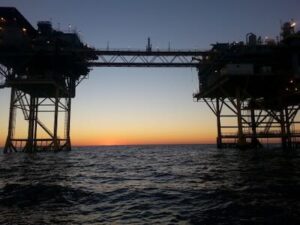 In my role as co-ordinator for Stratford Friends of the Earth, I was invited to a Zoom session with two activists living in Mozambique who described the impact of the gas project on their community and landscape. I heard that hundreds of families have been forced to move out of their homes to make way for the new gas developments, and that conflict and militarism is increasing in the region. There have been reports of human rights abuses perpetrated by the army, including murder and extortion. The gas project is also situated on the Cabo Delgado coastline, which could have untold consequences for an important site for nature nearby, the Quirimbas Archipelago. Yet the UK government is investing taxpayers’ money in this project rather than putting it where it would be better spent: towards helping Mozambique to develop renewable forms of energy. The resulting carbon emissions will make it less likely we can avoid catastrophic temperature rises.
So that’s why people in Stratford-upon-Avon should care about Mozambique. If you want to know more about Friends of the Earth and this campaign, feel free to email me on stratfordonavonfoe@outlook.com.


